The Complete Fishing Collection โ three illustrated books, written to be used together: where to go, what to put on the hook, and what to hold it with. 412 pages, no brand names anywhere, and an honest word on every method that has limits.

Most anglers fish a very small number of very obvious places, with tackle that was built to do something else, using bait they apologise for.
That's three problems, and they're the same problem: nobody ever sat you down and explained it. So you fish the spot you can see from the car park, you buy the rod because it was on the end of the row, and you use the bait that felt least embarrassing at the counter. This collection fixes all three.
The Complete Fishing Collection is three illustrated first editions, written to be used together: where to go, what to put on the hook, and what to hold it with. Four hundred and twelve pages across three books โ and each one opens with a chapter you can act on the same weekend, before you've read the rest of it.
There are no brand names in any of them, and no prices. Everything is described by what it is and what it does, so none of it goes stale in a season. And every method that has limits gets an honest word about where it falls short โ because your money and your Saturday are both worth protecting.
Two anglers drive to the same lake. Guess which one catches more fish.
| The usual way | The Collection way |
|---|---|
| The same three obvious spots, because they're the ones you can see | 500+ public waters across fifty states โ and how to read water you've never seen before |
| Standing in the aisle with four hundred rods and no idea | One setup that does almost everything, and the reasoning behind every other choice |
| Bait you apologise for at the counter | Eleven bait families, thirty make-at-home recipes, and 48 species with what to put in front of each |
| A book full of brand names that went stale a season ago | Everything described by what it is and what it does โ nothing to go out of date |
| A fish that swims off and quietly dies anyway | Release decisions running through all three books โ hook choice, line strength, how long you play it |
Where to go, what to put on the hook, what to hold it with. Three books. One weekend to start.
Three illustrated first editions, 412 pages in total. Written to be used together.
500+ places across America where the fish actually bite. Seven chapters teach you to read any water at all โ how to find public access other anglers overlook, how to read a lake and a river, how fish move through four seasons, what to do in the first hour on water you've never seen, and how to release a fish so it lives. Then the atlas itself: fifty states across six regions, ten public waters each, with the species they hold and an honest description of what kind of fishing it is. Every state opens with its character and closes with one thing worth knowing that isn't in the brochures.
Every bait that works, and the weird ones that work better. Twelve chapters on the mechanics โ what a fish can actually detect and in what order, four rigs that cover almost everything, how to keep bait alive, how to read a bite, and what to do when nothing is working. Then the catalog: eleven families from worms and minnows through cut bait, roe, kitchen baits, dough and stink baits, chum and additives. Then the weird ones, sorted honestly into the ones with a real explanation, the ones that work and nobody is quite sure why, and the ones that are mostly stories anglers tell each other. Then thirty recipes you can make yourself, and a reference running the other direction โ 48 species, and what to put in front of each one.
Rods, rigs, tactics, and everything in between. Seven chapters that explain every decision you make in a tackle shop, written for anyone who has stood in the aisle with no idea which of the four hundred rods to pick up. Then the reference core: 16 knots written as numbered steps rather than drawings, 30 rigs, and 52 lures, each with an honest word on where it falls short. Then casting and presentation, 60 situations you'll actually stand in and the adjustment that matters, the hookset and the fight and the landing โ and a reference section with 30 complete setups by kind of fishing, a troubleshooting index, a maintenance schedule, and a glossary of the hundred-odd terms every tackle shop assumes you already know.
Three things to do before your next trip โ an hour of map work, a state survey report, and a cheap thermometer. The three baits to start with, which between them catch something in almost every body of fresh water in the country. And the setup that does almost everything: a seven foot medium power fast action spinning rod, a 2500 or 3000 reel, ten pound monofilament, and four things to add.
Brands change, and a book full of them goes stale in a season โ so everything is described by what it is and what it does. There are no launch coordinates, ramp fees, slot limits, or current regulations either, because a printed number that's wrong is worse than no number at all. Every state fish and wildlife agency publishes all of it free, updated and authoritative, and all three books tell you to go there before you go anywhere.

"Found two public stretches in my own state I'd driven past for eleven years. Took my grandson to the second one. He thinks I've been holding out on him. I have."
"I bought the rod the Handbook describes instead of the one I'd been talked into. First honest answer I've had about tackle in thirty years โ and it cost less."
"Made three of the recipes out of the Bait Bible for about the price of one jar of the shop stuff. My buddy still fishes the jars. We keep count. He's stopped keeping count."
Bob has spent a lifetime on lakes and rivers with a rod in one hand and somebody to teach in the other. His channel, Bob's Bait Box, is where he shares what half a century of early mornings taught him: fishing isn't expensive, complicated, or secret โ and the tackle trade is counting on you believing all three.
What he loves best is the moment a bobber goes under for somebody who'd stopped believing it would. These three books are what he'd hand you at the dock if he could โ every method he trusts, and an honest word on the ones that have limits.
Delivered to your email in the next two minutes.
Visa ยท Mastercard ยท PayPal ยท Apple Pay โ secure checkout by Gumroad
It's written for anyone who has stood in a tackle aisle with no idea which of the four hundred rods to pick up. Each book opens with a chapter you can act on the same weekend โ an hour of map work, the three baits to start with, and the one setup that does almost everything. You can fish off that first chapter while you read the rest.
Because brands change, and a book full of them goes stale in a season. Everything is described by what it is and what it does โ a seven foot medium power fast action rod, ten pound monofilament โ which is the part that stays true. You can walk into any shop in the country and buy it.
The waters are public and the reading skills don't expire. What you won't find is launch coordinates, ramp fees, slot limits, or current regulations โ deliberately, because a printed number that's wrong is worse than no number at all. Your state fish and wildlife agency publishes all of it free, current and authoritative, and all three books tell you to go there before you go anywhere.
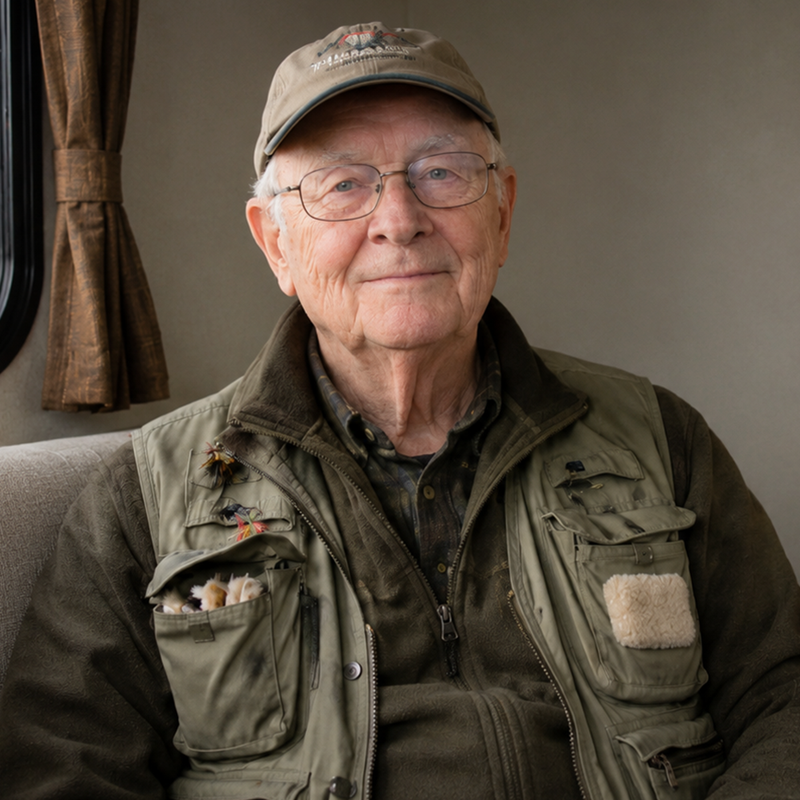
The videos are the doorway. These are the whole thing in one place, in order โ the atlas, the bait catalog, and the tackle reference โ so the answer is on the page instead of forty minutes into a video, and it's yours offline forever.
Because they're written to be used together, and splitting them would be pretending they're three separate ideas. Where to go, what to put on the hook, and what to hold it with is one question with three parts. $27 for all 412 pages, once.
Instant download after checkout โ three illustrated PDFs. Read them on your phone, tablet, Kindle, PC or Mac, or print the reference pages for the tackle box.